Skip to content
SHARE TO SOCIAL MEDIA
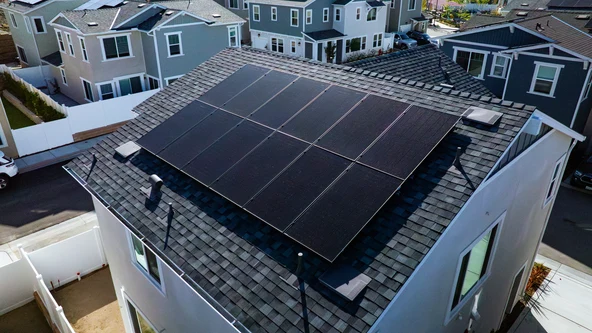
A solar array is a group of multiple solar panels connected together to generate electricity from sunlight. Solar arrays are the main electricity-producing part of a solar energy system.
Each solar panel contains photovoltaic (PV) cells that convert sunlight into electricity. When several panels are connected and installed together on a roof or ground-mounted structure, they form a solar array that produces enough power to help run a home or building.
How a solar array works
A typical residential solar array works as part of a larger solar energy system:
Sunlight hits the photovoltaic cells inside each solar panel.
The cells convert sunlight into direct current (DC) electricity.
An inverter converts that electricity into alternating current (AC) power that can be used in the home.
The number of panels in a solar array determines how much electricity the system can generate. Arrays may contain just a few panels on a home or hundreds of panels in large solar installations.
Where solar arrays are installed
Solar arrays can be installed in several locations depending on the property and available space, including:
Rooftop solar arrays on homes and buildings
Ground-mounted solar arrays installed on open land
Community solar arrays, where multiple households share the energy generated by a single installation
Regardless of where they are installed, solar arrays work the same way: by capturing sunlight and converting it into usable electricity.
GO SOLAR
Take control of your energy bills
Reliable power, predictable energy bills