Why Modern Power?
What's the big deal?
See the difference between traditional and solar power

How American energy availability is rapidly changing
The U.S. Department of Energy (DOE) determined in 2025 that our national power grid is reaching a breaking point.* Here’s what we’re facing and how we can improve our energy trajectory:
New energy demand
The rise of artificial intelligence (AI), new technology, and growing number of data centers is creating a massive "power surge" across the country. The DOE warns that our current grid simply wasn't built to handle this much demand this quickly.
Retiring old energy sources
We are closing old power plants faster than we can build new, reliable ones to replace them. This creates a "supply gap" where there isn't always enough power to go around during busy times.
Growing reliability risk
Because of the projection for more energy demand and less energy supply, the DOE projects the risk of power outages could increase 100 times over by 2030.
New solutions for a new era
The old way of getting power can't keep up. With Sunrun, you can create and store your own energy. This helps the whole community by reducing grid demand and keeps your family safe with reliable backup power from the sun.
Traditional vs. solar energy
Understanding your energy path
There are three major steps in the energy process from creation to everyday use. See how these steps differ with traditional versus solar energy.
Generation
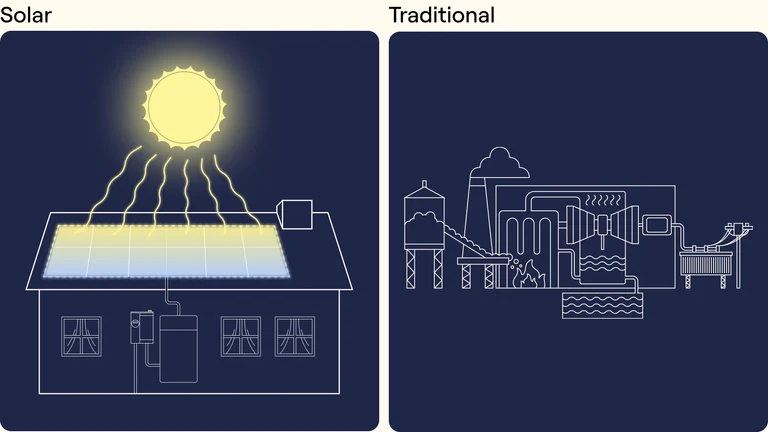
Solar energy: With solar, energy generation is simple. It is produced directly from your roof, giving you control over where your energy comes from.
Traditional energy: Electricity is generated at large, distant power plants often by burning limited fossil fuels like coal, oil, or natural gas, which took millions of years to form.
Distribution
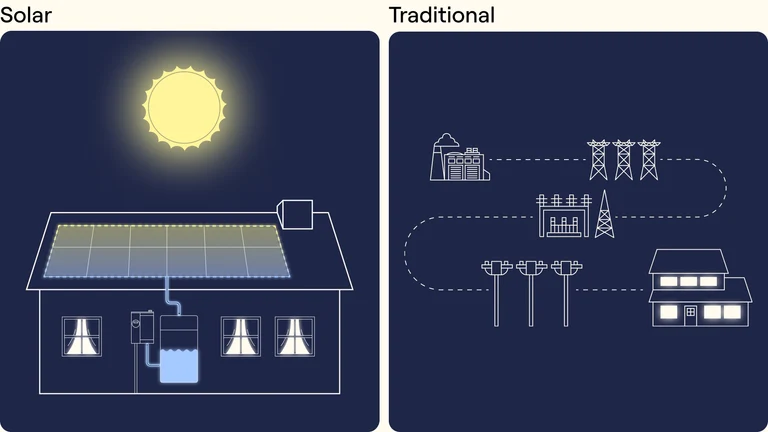
Solar energy: You can use and store your energy as you produce it while still having the utility grid as a secondary source of powering your home.
Traditional energy: Generated power travels hundreds of miles through a vast, aging network of lines. This infrastructure is costly, inefficient, and increasingly unreliable, making it vulnerable to outages during extreme weather.
Consumption
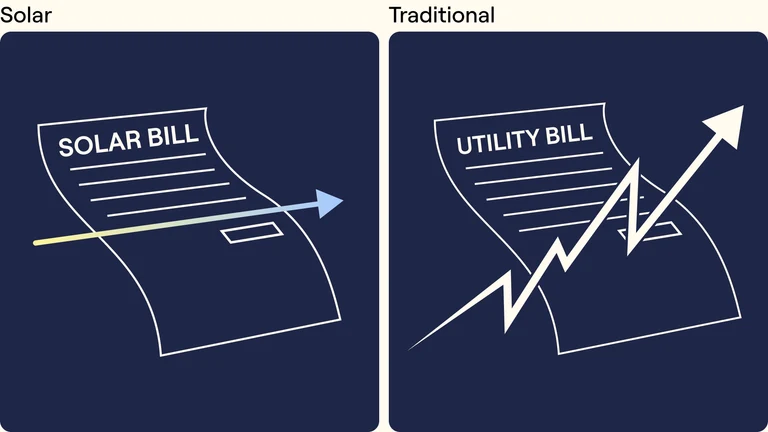
Solar energy: The energy your system produces will no longer be subject to utility rate increases because you'll know precisely what you're paying for that electricity - every month and for the next 25 years!
Traditional energy: Your energy costs are subject to continuous utility rate increases. These companies often operate without competition, leaving you with little control as they are incentivized to raise rates to cover their expenses.
What you get with solar and storage
Take control of your home’s energy and enjoy peace of mind, no matter what’s happening with the grid or utility rates.

Predictable bills

Outage protection

Rewards for grid exports

Energy independence & control
FAQs
The electric grid is the vast, interconnected infrastructure that delivers electricity to homes and businesses. It's essentially a complex network made up of power plants, high-voltage transmission lines, substations, and local distribution lines.
Think of it in two main parts:
Generation: This is where electricity is produced, often at large, distant power plants.
Distribution: This is how that electricity then travels through various lines and substations to reach its final destination where it's used.
Due to the seasonal changes in solar energy production along with your own personal energy habits, electricity bill savings are possible but not guaranteed. With the Sunrun Subscription Plan you lock-in a predictable monthly solar payment for years to come. Depending on the annual increase of utility rates in your area, your Sunrun rate may remain more affordable than your utility rate and you will be using less energy from the utility than prior to going solar.
It’s important to keep in mind that solar isn’t just about savings. With it comes the benefits of reliable, accessible energy, outage protection, and increased energy independence.
The three main reasons you should consider getting a home battery are:
Outage protection: Standard solar-only systems actually shut off during a blackout to protect utility workers. With a battery your extra solar energy has somewhere other than the grid to be stored. This means in an outage your solar panels will keep producing energy during the day and you’ll have stored energy at night.
Protection from peak rate hours: If you have time of use rates, the evenings are likely the most expensive time to use electricity, which unfortunately is often when the sun has stopped shining. However, with a home battery you can use your extra solar energy when the sun is down, avoiding those peak rates.
Opportunities to earn rewards: Many areas offer dispatchable energy programs where during times of peak demand home batteries, EVs, etc. can send electricity to the grid. Homeowners who participate in these programs are compensated, making individuals and the community happy.
Learn more about the benefits of a home battery here.
The advantages of home solar and battery storage go beyond the type and source of energy your home uses. While clean energy from your utility is beneficial, the issue of grid reliability is still a threat when you rely on an aging grid and increasing community demand for energy. With solar and a home battery you can generate and store your own electricity while also pulling from the grid as needed. With the Sunrun Subscription Plan you can also get a predictable monthly rate for your solar energy, potentially at a more affordable cost than what your utility offers.
Yes. Aging infrastructure and extreme weather are causing more frequent outages as recognized by the U.S. Department of Energy. In addition to an aging grid and increased weather events, the rapid construction of data centers is demanding a significant amount of energy from the grid, potentially leaving areas with a shortage of available energy*.
* Department of Energy Report on Evaluating U.S. Grid Reliability and Security
There are many factors that affect electricity prices. Here are a few key reasons from the U.S. Energy Information Administration (EIA) to keep in mind:
Fuel prices: In areas that rely on natural gas and petroleum for electricity generation, when costs of the goods used to make energy rise, so does the price for the end user.
Infrastructure costs: In order to maintain, build, and operate power plants, power lines, substations, and more there are constant needs to repair and improve systems to last and stay protected for years to come.
Extreme weather: Often as a result of severe storm, wildfire, wind or other natural disasters some utility companies may raise utility rates to cover upgrades.
Regulations: Utilities can be for-profit/investor owned (IOUs), public service (run by local governments), or coo-ops (owned by the community members served). This difference in structure means that some areas have fully regulated prices based on commissions, while other locations have a mix of unregulated and regulated energy costs.
Electricity costs are highly dependent on your geographic location. By speaking with a Sunrun representative you’ll get a better understanding of the reason for utility rate changes in your area.
Explore more about modern power
Switch to modern power