Skip to content

SHARE TO SOCIAL MEDIA
Hello, solar customers and enthusiasts! Eager to dive into solar panel maintenance? You're in the right spot.
Solar panels are a long-term energy asset, but they’re not completely maintenance-free. Dust, bird droppings, and even snow can diminish their efficiency, so it's a good idea to ensure panels are regularly cleaned.
Whether you're a homeowner with an existing solar system or you’re contemplating going solar, consider this your guide to keeping panels clean and running efficiently. We’ll break down the what, when, and how of solar panel cleaning, so you can be sure to maintain existing performance.
Quick answer: The rate that solar panels require cleaning varies. Depending on your location, rain can often remove light debris, however, dust, pollen, bird droppings, or snow buildup can reduce output over time. When cleaning is needed, gentle methods and proper safety precautions are essential.
What's inside:
Why clean solar panels?: Discover why a clean panel array ensures maximum panel output.
When to clean: Recognize signs indicating your panels require a thorough scrub and the frequency for doing so.
How to clean: From soap-less brushes to advanced nanoparticle coatings, we'll discuss every method available.
Safety first: Tips for ensuring safe, effective cleaning.
FAQs: Answers to all your pressing questions about solar panel cleaning.
When to clean solar panels?
How often your panels need cleaning depends on where you live, local weather conditions, and the solar design. Frequent buildup of dirt or ash can negatively impact solar production, however some areas around the country receive enough rainfall throughout the year to keep the panels relatively clean.
Heavy soiling can reduce energy production and solar output over time, particularly in dry or dusty environments, while light dirt is often washed away by rainfall.
So if you live in a really dry climate with lots of dirt in the air, if you’ve recently experienced some intense weather, or if your dirty panels are affecting your home’s curb appeal, we suggest a thorough cleaning. If that’s the case, consider the following:
Your personal safety. Please do not get on the roof to clean your panels. Getting up on the roof can be dangerous without the proper safety precautions.
The time of day or year. Is it crazy hot outside? If yes, then putting cold water on your panels may actually damage them. Better wait until it cools down. Is it slick or wet outside? Maybe wait until it’s safer to maneuver the equipment.
Different options are out there: DIY manual and automatic cleaning are possible. However professional cleaning, which may be offered by your solar provider, remains the safest, most reliable method when it comes to maximizing the value of your solar system. We’ll explore each available method of cleaning in detail below.
Quick take: Lowered energy efficiency and apparent dirt indicate it's time to consider the different options available when it comes to cleaning.
Methods for cleaning solar panels
The cleaning process for solar panels isn't a one-size-fits-all task. Different methods suit different needs, each with its own set of pros and cons.
Manual cleaning
Many solar agreements restrict the act of manually cleaning your panels. With this in mind, we generally do not advise solar owners to climb on their roofs or scrub their panels themselves. However, if you do manually clean your panels there are a few things to be aware of.
Note: If you use this method, be sure to use a long-handled roof brush so you can clean your panels from the safety of the ground.
Pros: Straightforward
Cons: Labor-intensive, can only be done safely on single story homes, potential panel damage, stressful, potential soap-residue after cleaning can reduce performance
Tools for cleaning solar panels:
Long-handled and soft-bristle brush that’s specially-designed for solar panel cleaning.
Garden Hose with spray nozzle
Bucket
Soap-free cleaner
Step-by-step guide to manually clean solar panels:
Turn off the solar panel system for safety.
Fill a bucket with water and mild detergent.
Gently scrub the panel surface using a long-handle soft-bristle brush while standing on the ground.
Rinse using a hose, opting for a gentle flow via the spray nozzle.
Soap-free brushes and sponges
Excellent for removing dirt and grime without residue. Make sure to use specialized solar panel cleaning brushes or sponges.
Pros: Designed for cleaning without soap residues, eco-friendly.
Cons: They may not be as effective at removing stubborn grime.
Safety measures:
Deactivate the solar panel system before cleaning.
Use a long-handled roof brush or sponge so you don’t need to climb onto your roof
Wear rubber-soled shoes for better grip.
Professional services
When to consider professional solar cleaning:
Depending on the size of your home and the orientation of your panels, you may find that it’s best to bring in professionals. There are many options to choose from, but reliability and consistency are the most important factors when it comes to maximizing performance and mitigating risk. For example, there are premium subscription services like Sunrun Shine that send experts to your home and ensure a safe, efficient, and stress-free cleaning. This isn’t just important but essential in the following cases:
Post-storm or natural disaster
After a significant drop in panel efficiency
If you live in a dry, dusty, or high pollen area
If soapy residue or grime was left by a previous cleaning
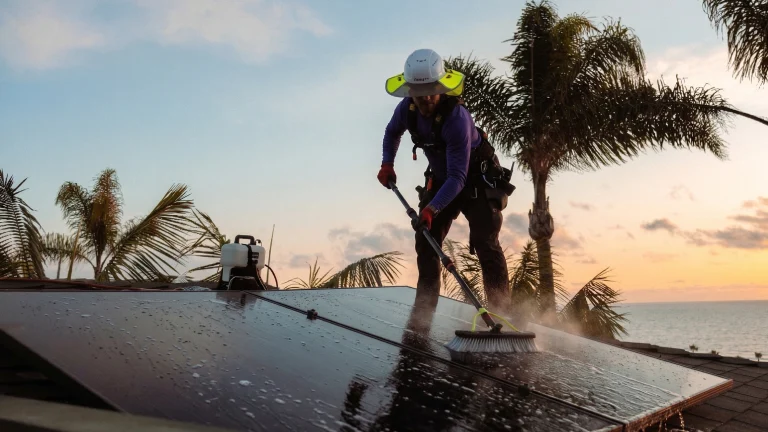
With premium options, your home will be cleaned safely by certified technicians using proper harnesses and safety measures. They’ll offer quality cleaning with pressurized, deionized water along with brushes specially designed for solar panels.
Note: If your system is operated by Sunrun, you’ll be able to see the before and after impact that professional cleaning has had on your system’s performance — this way, you’ll be better informed and constantly up to date about your solar system’s performance.
Automated cleaning systems
Types of automated systems:
Robotic cleaners
Sprinkler systems
Electrostatic cleaning
Cost and efficiency:
Systems can cost as much as $1,200.
Up to 95% efficiency, reducing manual labor.
Using robotic systems
These advanced systems clean panels autonomously. Should you invest in a robotic solar panel cleaner for automated cleaning? For most homeowners, it’s likely not necessary, and comes with several risks.
Pros: Cleaning does not put one in personal danger.
Cons: High initial cost, may need an external power source. Devices may break or fail over time. Potential damage to panels or roof.
Geographic and placement suitability:
Ideal for large installations or dust-prone areas.
Not advised for slanted or vertical panel placements.
Quick take: Your approach to cleaning solar panels depends on various factors like budget, time, or environmental considerations.
How often to clean solar panels?
For those who do find their panels require cleaning in order to maintain performance, the average cleaning frequency is bi-annually. If you notice a decrease in your system’s efficiency, you’ll likely want to consider cleaning in order to maintain peak performance down the road.
Quick take: Cleaning intervals vary, but cleaning twice a year works for most people.
Tips for cleaning solar panels
Cleaning your solar panels involves not just dirt removal but also safety and efficiency. Here are some tips to optimize your cleaning efforts:
Safety considerations
Always have a partner for support.
We advise against getting up on your roof to clean your solar panels whenever possible, but if you feel that it’s necessary, hire a professional solar panel cleaning service.
Eco-friendly cleaning solutions
Use soapless long-handeled brushes to reduce energy consumption
Collect rainwater for use when feasible.
Frequently asked questions: Cleaning solar panels
What is the best thing to clean solar panels with?
Soft-bristle and solar specific brushes are ideal. Attach them to a long pole for hard-to-reach areas.
What cleaning products can I use on solar panels?
Professionals use deionized, pressurized water that leaves panels spot free and avoids any damage to the solar cells.
Can I use Dawn dish soap to clean my solar panels?
Experts often advise against using dish soap as it has the potential to leave a significant layer of soap residue. This can reduce performance over time although dish soap is unlikely to cause any permanent damage to the solar panels.
Can I just rinse my solar panels?
A simple water rinse removes loose dirt but may not eliminate stubborn grime. For thorough cleaning, soft-bristle brushes and mild solutions are advised. However, rinsing serves as good maintenance between deeper cleanings.
Should you use Windex on solar panels?
Avoid Windex or ammonia-based cleaners. These can leave residues affecting panel performance.
How to clean solar panels from snow?
Snow can significantly reduce the efficiency of your solar panels. We generally advise solar owners to let the snow melt. Because the panels are dark, they attract sunlight and will naturally melt snow safely.
Can you clean solar panels with bleach?
Avoid bleach or harsh chemicals, as these can damage solar cells and reduce efficiency. Opt for deionized, pressurized water for best results.
How do professionals clean solar panels?
Professionals often use deionized water systems and specialized solutions. They may also use extendable brushes for hard-to-reach areas.
What should you not do when cleaning solar panels?
Don't use abrasive tools: Hard bristles can scratch panel surfaces.
Avoid harsh chemicals: Avoid bleach and ammonia-based cleaners.
Don't use pressure washers: High-pressure hoses can damage the solar cells.
Avoid cleaning during hot days: Sudden temperature changes can stress panels.
Don't walk on the panels: This could break the glass or damage cells. We advise that you don’t get on the roof at all!
Maintenance and monitoring: Sunrun's comprehensive approach to solar efficiency
One of the best ways to understand the performance of your solar panels and how things like dirt may impact output is to use a monitoring system. Sunrun offers a robust maintenance and monitoring package for all PPA and lease customers to ensure your solar system is always at its best:
Sunrun's 24/7 system monitoring
Sunrun employs advanced monitoring technology that proactively informs us of any possible issues with your solar system. This ensures that your system is always operating at peak performance. You don't have to worry about constantly checking your system's status; Sunrun does it for you. If you own your Sunrun system, you can subscribe to 24/7 monitoring benefits with a Sunrun Pro Monitoring Membership.
Comprehensive warranty and service coverage
Depending on your location and type of agreement, Sunrun offers up to 25-year coverage* on all their equipment. This includes equipment replacement and system repairs for all parts and labor. Sunrun also guarantees that its roof penetrations are watertight for 5 years (or for the period specified in your customer agreement).
Insurance for your solar panels
The Sunrun Subscription Plan lease comes with full insurance coverage to protect your entire solar system against theft or damage. This means the system is covered in case of unforeseen circumstances.
Dedicated customer support
Every Sunrun customer receives dedicated support from the initial design phase to powering on your system. We walk you through every step and even provide email updates on your project's progress.
What if something breaks?
With a Sunrun PPA or lease, you pay nothing for repairs. We cover your system’s maintenance and take care of all the paperwork, scheduling, and more. Please review your Sunrun agreement for any exclusions.
Quick tip: By choosing Sunrun, you're opting for a worry-free, comprehensive approach to solar energy. From monitoring to maintenance, Sunrun has you covered.
So, there you have it—a deep dive into the world of solar panel maintenance and monitoring, environmental considerations, and a sneak peek into the future. By staying informed and proactive, you can ensure that your solar panels will continue to provide efficient, eco-friendly energy for years to come. Let's quickly recap what we've covered:
Why clean solar panels?: Dirty panels can reduce your system's efficiency and, consequently, your energy savings.
When and how to clean: Timing is crucial. We discussed various methods, from manual cleaning to automated systems and even specialized cleaning solutions like nanoparticle coatings.
Safety and eco-friendly practices: Prioritize plant-based cleaners with safe ingredients for your family's health. Harsh chemicals harm more than dirt. Look for third-party certifications like Safer Choice—they take the guesswork out of going green.
FAQs: We tackled common questions about cleaning materials, techniques, and special circumstances to give you a well-rounded understanding.
Maintenance and monitoring: Beyond cleaning, regular maintenance and monitoring are vital for optimal performance. With 24/7 cutting-edge monitoring technology from Sunrun, we don’t just keep an eye on things; we ensure your system's optimal performance around the clock.
The key takeaway here is that regular maintenance goes hand in hand with solar panel efficiency. It's not just about cleaning your panels but also about monitoring their performance, following manufacturer guidelines, and staying updated on new cleaning technologies and methods.
At Sunrun, we simplify this process for you. Our expert Solar Advisors guide you through every facet of solar care, from understanding how to optimize your system's efficiency to staying updated on the latest cleaning technologies and methods.
As the nation's largest home solar & battery installer, Sunrun offers dedicated support from the initial design of your custom-tailored solar system to the moment it powers on. With Sunrun, you're not just installing solar panels; you're investing in a stress-free, efficient, and sustainable energy solution for your home.
And remember, by taking a proactive approach to maintenance, you're not just extending the life of your solar panels—you're also maximizing their efficiency, which translates to more energy produced and potentially less grid energy used.
Armed with the right knowledge and tools, your solar production will stay as efficient and high-producing as possible.
*Customer agreements and warranties in Illinois and Puerto Rico last for 15 years