Skip to content
SHARE TO SOCIAL MEDIA
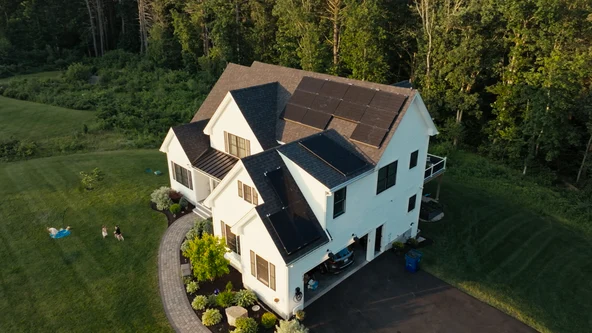
Sunlight strikes rooftop solar panels, which convert that light into direct (DC) electricity; a solar inverter turns DC electricity into alternating (AC) power that your appliances can use. Any excess solar power flows to a solar battery storage unit or the electric grid through a meter. You may earn bill credits for energy sent to the grid depending on your state and utility!¹
What this page helps you with
This page explains the hardware components in your home solar system and how they work together to generate and deliver usable electricity. Below is a step-by-step breakdown of a residential solar energy system setup and explanations of each major component to demystify how solar energy works.
How do solar panels generate electricity?
Solar panels use photovoltaic cells to convert sunlight into direct-current (DC). An inverter converts DC to alternating current (AC) which is called electricity.
Follow this step-by-step breakdown for details:
Sunlight hits the photovoltaic cell layers in solar panels and frees electrons, creating direct current electrical energy.
A solar inverter converts that DC electricity into alternating current (AC) that matches your home’s wiring.
The AC power feeds your main electrical power, instantly running lights, appliances, and other devices.
Excess energy (think of a sunny Saturday afternoon) is either: Stored in a solar battery storage unit, such as a Tesla Powerwall or sent through a bi-directional electric meter to the utility grid,where it may earn you kWh credits depending on your state and utility.
Key insight: Solar energy works as a complete system. The inverter is the crucial bridge, converting raw DC from the solar technologies into the usable AC that safely powers your home.
What are the key components of a solar power system?
Each part uniquely influences your home's energy efficiency and output. Homeowners should know about the essential hardware for a complete installation.
Solar panels
Types of Solar Panels:
Monocrystalline vs. polycrystalline: Monocrystalline solar cells offer higher efficiency, typically around 20–25%, and a sleek black appearance.² Polycrystalline cells generally achieve efficiencies just over 18–21%, with a more blue, marbled look.⁶
Inverters
Inverters are the brains of the operation, converting DC power from solar panels to usable AC electricity for your home. Different types, such as those with solar power optimizers, suit various needs.
1. String Inverters:
String inverters are the most widely used type of inverter in residential solar systems. In this setup, solar panels are grouped into strings and connected to a central inverter that converts all the electricity at once. This arrangement tends to be more affordable and simpler to install, and it works best on roofs that receive consistent sunlight without significant shading.7
2. Power Optimizers:
Power optimizers are paired with a central string inverter. They don’t convert DC to AC themselves; instead, they condition the electrical output from each panel to reduce losses before it reaches the inverter. This approach delivers much of the performance benefit of microinverters while still using a single central inverter, improving system output in shading or on roofs with multiple orientations.7
3. Microinverters:
Microinverters are installed at each individual solar panel, converting DC to AC right at the source. This allows every panel to operate independently, which can improve performance when some panels are shaded or face different directions. Microinverters also make it easier to monitor individual panel performance, though they are generally more expensive than string inverter setups. 7
Main electric service panel
Often called the “breaker box,” this is where electrical energy from your inverter connects to your home’s circuits. Some homes require a panel upgrade to manage the extra power.
Sunrun monitoring app
A dedicated smart electric meter captures real-time production data from your system. The Sunrun mobile app displays this information and sends daily generation alerts and quarterly performance summaries to keep you informed.
Optional battery storage
Keeps lights on during grid outages.
Maximizes self-consumption of solar power with a solar battery.
Shifts usage away from peak-rate hours (Time-of-Use savings) - depends on state and utility.
Pro tip: Think of a solar battery as a financial tool. It lets you store the sun's energy during the day when rates may skyrocket and use that energy at night when rates may be lower.
What happens to extra electricity?
Net metering can allow homeowners to send surplus solar energy to the grid and receive credits on their electric bills depending on where they live. Traditionally, many states offered a one-for-one credit at retail rates, effectively acting as a virtual storage solution where energy produced during the day can offset usage at night. This creates a flexible and efficient renewable energy system combined with battery storage.
Net metering policies vary significantly by state and utility, and many are evolving. Several states are revising their net metering rules, considering Time-of-Use pricing, grid stability, and compensation structures for energy producers. Some states use Time-of-Use rates that pay different values by the hour;³ Adding battery storage can help homeowners manage when their solar energy is used, particularly during higher-cost evening hours.
Because of this diversity and ongoing policy changes, homeowners should check their state and utility's current net metering or net billing policies for the most accurate and applicable information.
Key insight: Net metering turns the utility grid into your personal energy bank. You 'deposit' excess solar power during the day and 'withdraw' that value at night, ensuring no energy you produce is wasted.
New to solar? Start by understanding how solar power is generated and why it matters here.
Top homeowner questions about residential solar
Can solar panels generate power on cloudy days?
Yes. While weaker in dense clouds, solar cell layers can still absorb diffused light and can still generate power even though it will be less than output during full sun.
Do solar panels work at night?
No, solar panels require sunlight to generate electricity. You will draw power from the utility grid or the stored energy in a home battery at night.
How long do solar panels last?
Most premium solar panels are warrantied to maintain at least 80% of their original output after 25-30 years.⁴ Many solar energy systems continue producing electricity at a diminished capacity well past the 30-year mark.
What maintenance is required?
Solar energy systems require minimal upkeep, typically quarterly visual checks and an occasional rinse to clear dust or pollen. Sunrun’s monitoring system alerts you to any significant performance drops.
Is home solar right for you?
Yes! Solar can be right for many homeowners if your roof has good sunlight and you are looking to convert a portion of your utility bill to a locked-in rate.
The U.S. Department of Energy estimates that millions of homes are ideal candidates for solar each year, with a potential of roughly 30 gigawatts of new capacity annually.⁵ Consider these factors in your solar system design to determine whether your house fits well.
Understand your roof’s solar potential, including its location, angle, and any shading from trees. Compare your current electricity rates to your area's projected solar energy difference. Decide whether you want backup power from solar batteries for outage protection.
Installing solar panels on your home
Shopping for solar means selecting components tailored to your home. Work with a reputable installer to determine the correct panel wattage, inverter type, and position for production.
Beyond the install, consider city codes, utility approval, and operational tools. You may want solar panels that connect to monitoring apps, or systems that plan for battery add-ons later.
Once approved and installed, enjoy the benefits of a connected and efficient system that taps into valuable solar technologies and delivers long-term performance.
The time for solar technology in your home is now
Going solar is no sweat when you choose Sunrun to install solar panels on your home. We’re here to help you understand how photovoltaic cells work, how solar panels produce energy for your daily needs, and whether they’re the right fit for your home. And if you’ve still got questions, no problem.
How much you can save depends on your home, but multiple financing options are available, one of which will meet your specific needs, your life, and your home. With the solar industry continuing to grow and innovate, there’s never been a better time to explore your options.
If you’re curious about what could be done, the hassle-free way to figure it out is to have a no-strings-attached consultation with one of our experts.