Skip to content
SHARE TO SOCIAL MEDIA
Definition
Solar panels, also called photovoltaic panels or PV panels, are the parts of a solar energy system that capture sunlight and convert it into electricity. Each panel is made up of connected solar cells, which use semiconductor materials to produce direct current electricity when sunlight hits them.
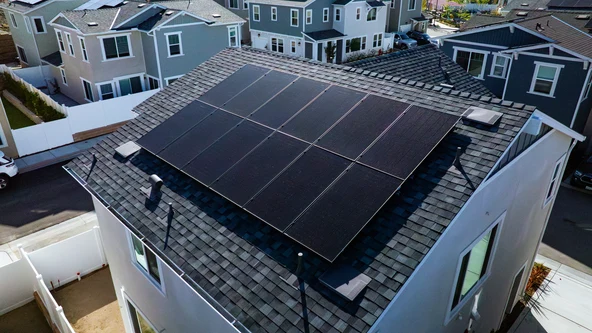
For a home, solar panels are typically installed on the roof or another sunny area of the property. The panels generate electricity during daylight hours, and other parts of the system help make that electricity usable in the home.
How solar panels work
Solar panels use photovoltaic technology to turn sunlight into electrical energy. According to the U.S. Department of Energy, individual solar cells are connected together to form larger modules, commonly known as solar panels.
The electricity produced by solar panels starts as direct current, or DC, electricity. A solar inverter then converts that power into alternating current, or AC, electricity, which is the type of electricity most homes use.
Solar panels are one part of a complete solar system
Although solar panels are often the most visible part of a home solar setup, they are only one component of a complete system. A residential solar system may also include inverters, mounting equipment, wiring, monitoring technology, and, in some cases, battery storage.
The amount of electricity solar panels can produce depends on several factors, including roof space, sunlight, shading, panel placement, local weather, and system design. Tools like NREL’s PVWatts Calculator can estimate solar production based on a property’s location and system details.
Solar panels and home energy
For homeowners, solar panels can help produce electricity directly from sunlight. When paired with battery storage, a solar system can also store energy for later use, depending on the system setup and local utility rules.
Sunrun offers home solar and battery storage options, including the Sunrun Subscription Plan, which is designed around predictable monthly payments and little-to-no money down options.
GO SOLAR
Take control of your energy bills
Reliable power, predictable energy bills