Skip to content
SHARE TO SOCIAL MEDIA
This step-by-step guide explains each phase of the solar panel installation process, from the initial agreement through home review, permits, installation, inspection, and utility permission to operate (PTO), ending with full system activation.
Let's walk through the phases of installing solar panels at your home, neighbor-to-neighbor, with insight into how Sunrun keeps things smooth at every step.
Sunrun solar and battery installation
How a solar and battery system installation works
A quick look at the solar project journey (spoiler: it’s smoother than you think).
Most residential solar panel installations, whether you’re in California’s high-sun Mojave or New Jersey’s brisk coast, follow six main stages:
Home review and custom system design
Permits and paperwork
Delivery day and roof prep
Installation of panels, solar inverters, and (optionally) your solar battery
Final inspection and utility permission to operate (PTO)
Full solar power system activation and 24/7 monitoring
Total timeline varies and your utility’s connection process, weather, and city permits can all influence the timeline. Sunrun backs workmanship for 25 years throughout the ride and watches your system around the clock, so you’re never flying solo.
Phase 1: Home review and custom solar system design
A licensed Sunrun solar installer climbs your roof, clipping the harness in, to collect the details that make your solar array uniquely yours. Every home is different, so precise measurements are essential.
What happens during the visit?
Shade analysis with a handheld sun-tracking tool to identify potential shading
Assessing the roof's condition: age, material, and fastening integrity
Electrical panel review to ensure enough capacity for your new solar circuit
What homeowners should know
Most roofs under 10–15 years old pass inspection, but older shingles may need attention first.
Pitch matters: a 30–35-degree tilt and proper southern orientation often nets great year-round production in California and Arizona.
Materials like asphalt, metal, and concrete tile all work; they use different mounting hardware.
How Sunrun tailors your design
Advanced modeling software maps panel placement for peak output without drowning you in tech talk.
If your roof isn’t the right fit, ground-mount solutions are on the table.
Home materials like metal or shingles work with various racking types. Our team ensures your rooftop solar systems are mounted safely with code-compliant hardware. We also consider ground-mounted arrays for properties with a flat roof or homes with space constraints.
Ground-mount vs. roof-mount: Ground systems shine on roomy lots, while roof arrays save yard space. A quick chat with your Sunrun consultant weighs aesthetics, permitting, and cost during the planning stage.
Key insight: The choice between roof and ground-mounted solar boils down to a simple trade-off: preserving yard space versus optimizing panel placement. Your property layout and local permits will guide the best decision.Roof mounted is the choice for most homeowners who don’t have acres of property. |
Phase 2: Permits, paperwork, and painless approvals
Solar may be powered by sunshine, but it’s fueled by paperwork first, including permits and local utility approvals. This is a critical step for a successful solar installation.
Plain-English permit rundown
Solar installations require several permits, which vary by location:
Building permit: verifies structural safety.
Electrical permit: confirms proper wiring and inverter specs.
Zoning permit or HOA letter: occasionally required for visual conformity.
Who handles what?
Our team handles these documents on your behalf. All you do is sign. Thanks to experience across 1M+ homes, from large solar companies to local subcontractors, we understand regional nuances, including utility company timelines and city delays.
Key insight: Don't get bogged down by paperwork. Experienced installers navigate the complex permitting process for you, turning a mountain of forms into just a few simple signatures. |
Phase 3: Solar panels delivery day and roof preparation
When the truck pulls up, you’ll see components for the racking system, sleek black panels, inverters, and maybe a Tesla Powerwall solar battery if backup power is in your plan.
Crew protections
Plywood paths guard landscaping.
Roof brackets distribute weight to avoid shingle scuffs.
Gutter shields keep brackets from pinching.
Homeowner night-before checklist
Here are some tips to prepare for installation day:
Clear the driveway and any carport space.
Secure pets inside; curious pups and dangling extension cords don’t mix.
If possible, mark sprinkler heads near walkways.
Hardware cheat sheet
Asphalt roofs: stainless steel lag bolts with flashing plates.
Clay or concrete tile: adjustable hooks that slip under tiles.
Phase 4: Install solar panels, inverters, and (optionally) your lithium-ion battery
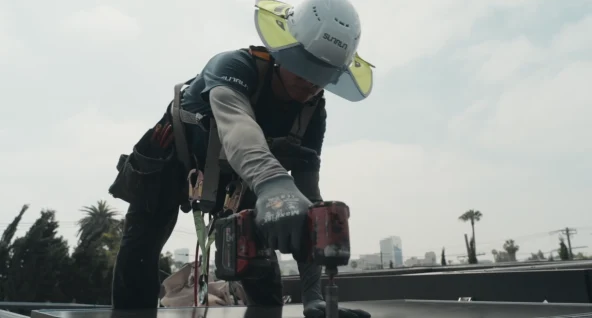
During this phase, our technicians mount the solar panels, install the inverter and any battery equipment and connect to your home's electrical connection.
Each panel is laser-leveled during connection to align with rafter anchors before being locked with tamper-proof fasteners. Our crew hardwires the solar inverter, configures conduit routes, links the panels to your breaker, and, if batteries are installed, sets up standby circuits.
Are you thinking ahead? Are you planning to add an EV later? Tell your installer now. We often combine upgrades in one job. Low-profile rails and all-black modules keep your solar panel system neat, and proper wire routing supports better airflow and easier maintenance.
Step-by-step flow
Racking lines up with rafters; crews laser-level each row.
Panels are securely mounted, clicking onto rails with tamper-resistant clamps.
Wiring bundles are routed into UV-rated conduit and to your service panel.
Inverter(s) mount near the meter or in your garage.
If you choose a Tesla Powerwall, it’s bolted to a studded wall and wired for seamless backup.
Meter upgrades or sub-panels finish the job if the existing electrical box is maxed out.
Quality and safety first
Sunrun crews follow the latest National Electrical Code (NEC) guidelines and use UL-listed hardware, which are two reasons professional installation is essential.¹
Expanding possibilities
Planning an electric vehicle fast-forward? Sunrun’s Ford vehicle-to-home integration can fold into the same inverter hub, saving a future retrofit.
Pro tip: Planning to get an electric vehicle? Discuss EV charger integration during your initial solar design. Combining projects can save you significant money and hassle compared to a separate installation later. |
Phase 5: Final inspection & the utility’s permission to operate (PTO)
Think of this as the solar report card. The final inspection is a key part of the installation process ensuring that the solar system meets local codes and regulations.
What inspectors check to ensure everything meets local standards
Roof attachments: no gaps, no compression damage
Conduit and wiring: proper labeling, neat bends, correct gauge
Inverter and disconnect: meets local code and NEC specs
Sunrun’s on-site rep walks side-by-side with the inspector to address questions on the spot.
The utility interconnection process and PTO
After municipal approval, Sunrun submits your interconnection application. Sunrun’s 24/7 monitoring system is already watching for connectivity and will ping you (and us) if it sees anything off.
Phase 6: System activation and your Sunrun monitoring app
The happiest flip you’ll ever switch.
How activation works
Utility grants PTO, sometimes via email.
A Sunrun tech or remote support agent guides you in turning the breaker to “on.”
Your meter starts its new dance: tracking energy your system makes, your home uses, and that is sent back to the grid.
Meet the app
Live production stats updated every few minutes.
Battery charge level if you added storage.
Support chat for quick questions, plus a library of how-tos.
Long-term peace of mind
25-year repair and maintenance promise: if something under warranty breaks, Sunrun will see the alert and handle the fix.
Annual performance reports benchmark year-over-year output.
DIY vs. professional solar install: Why the neighborly route still needs pros
Sure, you could spend a few weekends on a ladder, but here’s a reality check on the solar panel installation process:
Factor | DIY approach | Sunrun professional install |
|---|---|---|
Upfront equipment cost | Wholesale panels (variable quality) | Predictable package pricing |
Warranty coverage | Component only, often voided by self-install | 25-year workmanship + parts |
Construction timeline | Dependent on your free weekends | Crew finishes in 1–2 days |
Safety | Ladder falls, electrical hazards | Certified, insured professionals with proper safety features |
Monitoring and support | Manual checks | 24/7 app and service alerts |
Sunrun’s flexible financing, including leases and power purchase agreements (PPAs), helps many homeowners sidestep significant upfront expenses while enjoying professional craftsmanship.
Important: Doing it yourself can void component warranties and introduce serious electrical and fall hazards. Professional installation ensures safety and compliance and protects your long-term investment with workmanship guarantees. |
Ready for your own solar energy system?
A solar installation follows a clear six-phase path, and Sunrun shoulders most of the heavy lifting. Professional and Licensed crews, 25-year workmanship coverage, and real-time monitoring mean fewer surprises. A quick conversation can reveal whether your roof is an energy-making match.
Congratulations, the solar panel installation is complete! Now, you can use those shiny new, energy-generating solar panels.
Going solar is more than installing a few panels; it's about making confident, informed choices for your home. Whether you're installing to offset electricity bills, support renewable energy, or simply take control of how you produce electricity, we’re here to help.
Still wondering how many solar panels your roof can hold or how much energy you'll need in winter? Tap into 15 years of Sunrun expertise, and take one step closer to powering your life with the sun's energy.